
In this modern world online streaming is the biggest platform for any artist to make money out of his or her craft . However, in Africa people do love music and other craft that their loving artist does but not really ready to help the artist to make any income from their craft. Rather music lovers or artist fans like free downloads of their songs as well as videos.
But l think the problem with the africans has to do with lack of education about online streaming .
Every african artist is complaining about the low earning on digital streaming meanwhile they can’t even use their fan pages to educate their fans about the streaming. Although, artist like sarkodie, Burna Boy, shatta wale , Davido , stonebwoy ,wizkid , and many other artists in Africa are making it big so they really don’t go through the pain the young ones are facing. it will be nice to see sarkodie, shatta wale ,stonebwoy ,wizkid and the rest of the artist supporting the campaign #educate-fans on-digital-streaming on their fan pages.
Let’s learn something about streaming.
Streaming, a format making music more accessible than ever, allows artists (signed and unsigned alike) an opportunity to project their voices to an extent unforeseen in the vinyl era. But it’s always been a grey, subjective area on how effective streaming is for an artist to create a livelihood when compared to the conventional physical or digital album sales.
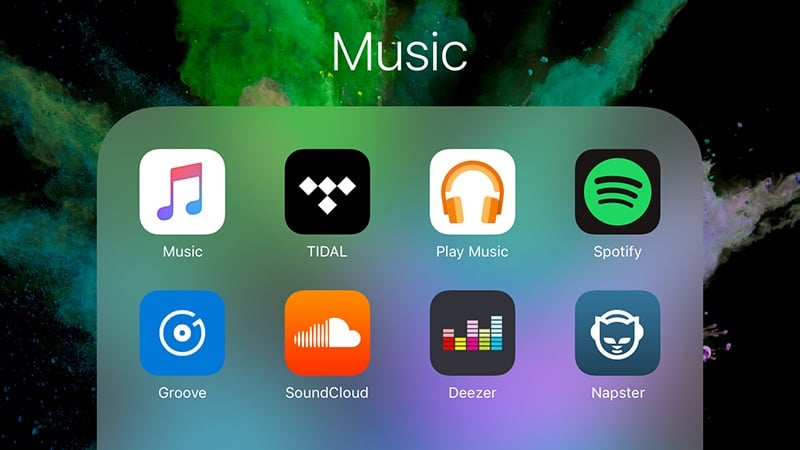
Just how beneficial is streaming to artists?
It is now possible for songs to reach audiences of enormous sizes, as shown by Ed Sheeran’s ‘Shape of You’, Spotify’s most streamed song with 1.6 billion streams. But this is just one example using the most streamed artist of 2017; what about those that don’t have such a large following, or those that are not signed to labels that have the promotional capability of Atlantic or Warner?
70% of the income from streaming platforms is paid to the labels that manage the artists, so it could be said that it is the labels who are exploiting the artists; streaming platforms want labels to allow their artists’ catalogues to be used, and in turn platforms will push good deals towards the labels so each side wins. But in a world of increasing fairness for workers, should we not also be making sure that pay for music is increasing?
Artists do not have to make their work available for streaming, but with music piracy a constant threat, and new artists being rushed into exploitative record deals, it seems the alternative would be dire. A report by the blog ‘Information is Beautiful’ compared the revenue for artists from each streaming service, showing that the best paying platform (Napster) was still a measly $0.0167 per stream. In second place (Tidal) was an even lower $0.0110 per stream.
These two platforms have 9 million users combined, which is only a margin of listeners compared to other platforms. This may be why they pay artists at a higher rate; they need to gain more users, so enticing artists by paying more and allowing exclusive deals. Tidal gave a two-week exclusive listen to Kanye Wests ‘The Life of Pablo’ on release, and also are the only service streaming Jay Z’s whole catalogue (this may also be due to Tidal being owned by Jay Z).
Apple Music, who entered the industry much more recently than
Spotify, also host exclusives – from Frank Ocean, Drake and Taylor
Swift. But does such exclusivity not decrease an artist’s overall
revenue? These albums will possibly be choked of their #1 spot on the
chart due to restrictions.
Back in the ‘golden days’ of physical
releases, it was necessary for a consumer to purchase a whole album to
listen to particular songs, costing around $12. After this the vinyl,
tape or CD could be played to the hearts content, until it inevitably
gets dropped or chewed up my a faulty player (in which case the album
will be purchased again).
The difference in modern times is that
music is no longer as much of an album experience, most listeners just
listen to the hits off of an album, not listening to it as it was
originally showcased.
This means that instead of whole
albums being purchased, individual songs are streamed, so is this
creating as much worth for the artists?
If an album cost
$12, it is likely the artist would get around $1.20 from the label,
making each track on a CD of ten songs being worth $0.12. If a musician
receives $0.0038 from Spotify per stream, it means a track would need
to be played 32 times to equal the remuneration from a physical
recording.
Looking through my personal Spotify library, I can see that most songs from albums I would have liked enough to purchase in physical form have most definitely received over 31 streams, perhaps some tracks even reaching over 100 streams.
Before listening to individual tracks was possible, it meant the artist could make an album full of mostly ‘filler’ songs. However, in order to maximize revenue now it means an artist has to put more effort into each track in order to keep that individual popularity at a high; if they aren’t releasing songs with record breaking streams, they will need a pretty consistent catalogue to earn enough to support themselves.
So what does the future hold?
Overall, my view is that streaming is better for the biggest artists: it allows them to reach a larger audience due to ease of access, cheaper prices, and tailored playlists that may suggest the music to listeners. This is also the case for smaller artists, but they may not receive enough streams to warrant the revenue that would have come with selling a physical release.
It is still clear that labels need to reconsider their fairness to artists, or else artists can take a stand like Chance the Rapper, who with his recent album ‘Coloring Book’ gained a number one Rap album Grammy. This was despite being a streaming-only album, a format that has the potential to be a more regular occurrence in the future.
thaanks for reading . my name is ATM GH
FOLLOW ME ON ALL SOCIAL MEDIA PLATFORMS AS ‘ATMEMPIREGH’
comment your idea in the comment box below. Let’s come out with ideas and support the talented individuals.
if you find this article useful, please share and subscribe for more .
Related stories
-

GOOD NEWS: 20,000 High-Yield Oil Palm Seedlings for Farmers in Upper Denkyira East
Farmers in the Upper Denkyira East constituency have received a major boost as the Member of Parliament, Emelia Ankomah, announces the distribution of 20,000 high-yielding oil palm seedlings to support agricultural growth and improve livelihoods across the district. This initiative is aimed at empowering local farmers, enhancing oil palm production, and contributing to economic development… Read more
-

Who is ATMblogger
Michael Teye Ali, a professional nurse and a blogger popularly known as ATM BLOGGER Gh. The owner of a website called Richghanaonline.com ATM blogger Gh is a well respected blogger in the Ghana entertainment industry who started his blogging in the year 2017. ATM blogger is one who believes that positive stories sells more than… Read more
-

Sir Bash Declares Bid for Deputy Youth Organizer in Upper Denkyira East
Awudu Bashiru Boye, popularly known as Sir Bash, has officially declared his intention to contest for the position of Deputy Constituency Youth Organizer for the National Democratic Congress (NDC) in the Upper Denkyira East Constituency. His announcement comes with a strong message of commitment to youth empowerment, grassroots mobilization, and party unity. According to Sir… Read more
-
BAPSA Congratulates Hon. Baba Jamal on His Parliamentary Victory.
The Boa-Amposem Past Students Association (BAPSA) proudly and heartily congratulates Baba Jamal on his resounding victory in the parliamentary by-election for the Ayawaso East Constituency. This remarkable achievement is not only a personal milestone for Hon. Baba Jamal, but also a moment of immense pride for the entire Boa-Amposem community. As an esteemed son of… Read more
 Richghanaonline.com
Leave a comment