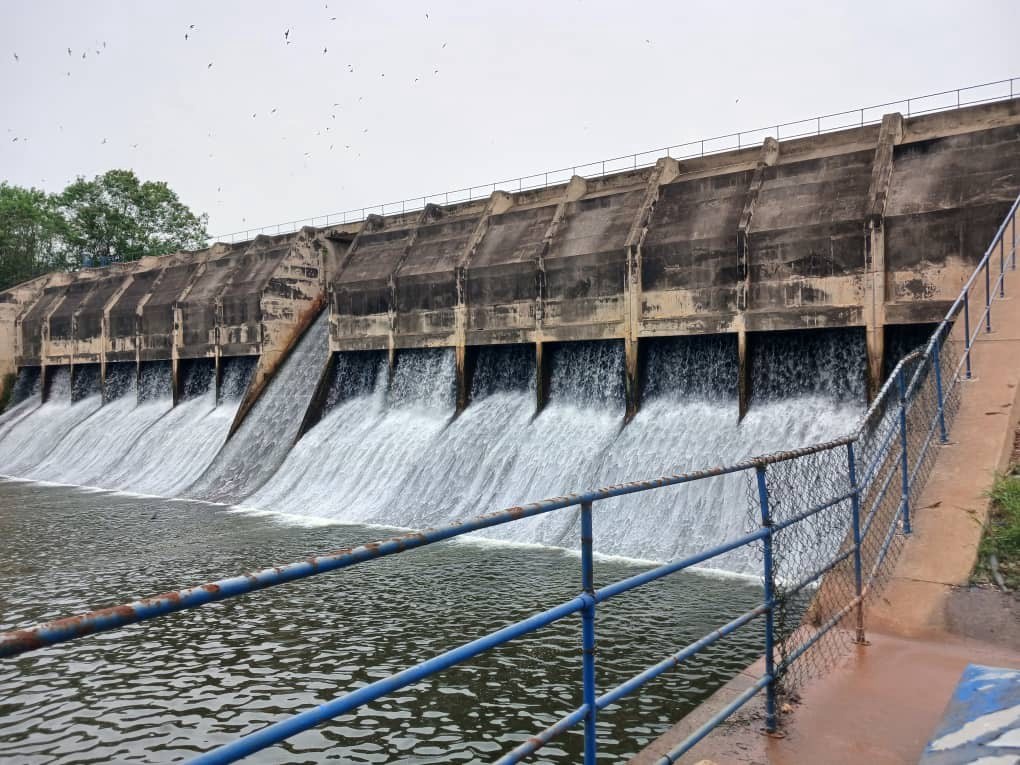
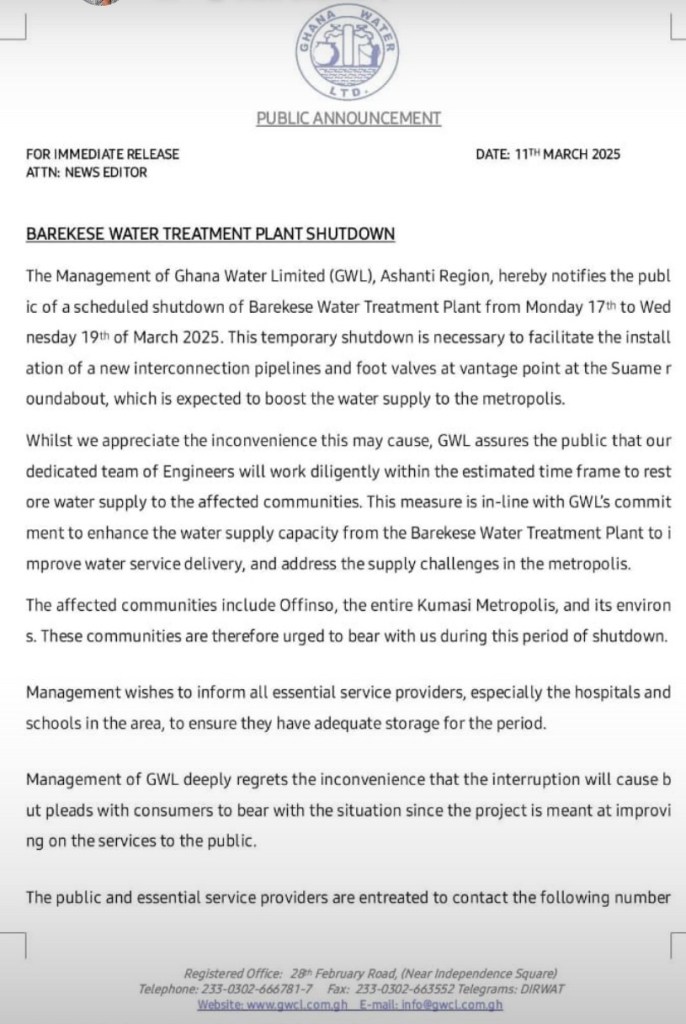
Water Shortages in the Ashanti Region: The Impact of Barekese Dam Shutdown Due to Galamsey Activities
The Ashanti Region of Ghana, known for its rich cultural heritage and vibrant communities, is currently facing a severe water crisis. The shutdown of the Barekese Dam, a critical water source for the region, has left thousands of residents without access to clean and reliable water. This alarming situation is a direct consequence of illegal mining activities, commonly referred to as “galamsey,” which have polluted water bodies and disrupted the region’s water supply infrastructure.
https://vm.tiktok.com/ZMBY6BvfM/
The Role of Barekese Dam in the Ashanti Region
The Barekese Dam, located on the Offin River, is one of the primary sources of water for the Ashanti Region, particularly for the capital city, Kumasi. It supplies water to millions of residents, supporting domestic, industrial, and agricultural activities. The dam plays a vital role in ensuring the region’s socio-economic stability, making its shutdown a significant blow to the community.
Galamsey: A Growing Menace
Galamsey, the local term for illegal small-scale mining, has been a persistent problem in Ghana for years. Despite government efforts to curb the practice, illegal miners continue to exploit mineral resources, often using harmful chemicals like mercury and cyanide. These chemicals seep into rivers and streams, contaminating water sources and rendering them unsafe for consumption.
The Offin River, which feeds the Barekese Dam, has not been spared from this devastation. The rampant galamsey activities upstream have led to severe pollution, forcing the Ghana Water Company Limited (GWCL) to shut down the dam temporarily. This decision was made to protect public health, as the contaminated water posed serious risks to consumers.
The Impact on Communities
The shutdown of the Barekese Dam has had far-reaching consequences for the Ashanti Region. Residents in Kumasi and surrounding areas are now grappling with acute water shortages. Households, schools, hospitals, and businesses are all feeling the pinch as they struggle to access clean water. The situation has forced many to rely on unsafe alternatives, such as untreated water from wells and streams, increasing the risk of waterborne diseases like cholera and dysentery.
The economic impact is equally concerning. Industries that depend on water for their operations have been forced to scale back production, leading to job losses and reduced income for workers. Farmers, who rely on the dam for irrigation, are also facing challenges, with crops withering due to lack of water.
A Call for Action
The current crisis underscores the urgent need for comprehensive measures to address the galamsey menace. While the government has launched initiatives such as Operation Vanguard and the Community Mining Scheme to combat illegal mining, more needs to be done to enforce regulations and hold perpetrators accountable. Strengthening monitoring systems, increasing penalties for offenders, and promoting sustainable mining practices are critical steps in safeguarding the region’s water resources.
Additionally, there is a need for public awareness campaigns to educate communities about the dangers of galamsey and the importance of protecting water bodies. Collaborative efforts involving government agencies, traditional leaders, civil society organizations, and local communities are essential to achieving lasting solutions.
Conclusion
The water shortages in the Ashanti Region, triggered by the shutdown of the Barekese Dam, serve as a stark reminder of the devastating impact of galamsey activities. As the region grapples with this crisis, it is imperative for all stakeholders to work together to address the root causes of the problem and ensure the sustainability of water resources. Access to clean water is a fundamental human right, and every effort must be made to protect this precious resource for current and future generations.
The people of the Ashanti Region deserve better. It is time to act decisively to end galamsey and restore the region’s water supply, ensuring a healthier and more prosperous future for all.
TRENDING STORIES
- GOOD NEWS: 20,000 High-Yield Oil Palm Seedlings for Farmers in Upper Denkyira East

- Who is ATMblogger

- Sir Bash Declares Bid for Deputy Youth Organizer in Upper Denkyira East

- BAPSA Congratulates Hon. Baba Jamal on His Parliamentary Victory.

- BAPSA Extends Warm Congratulations to Hon. Baba Jamal on Election as NDC Parliamentary Candidate for Ayawaso East




 Richghanaonline.com
Leave a comment