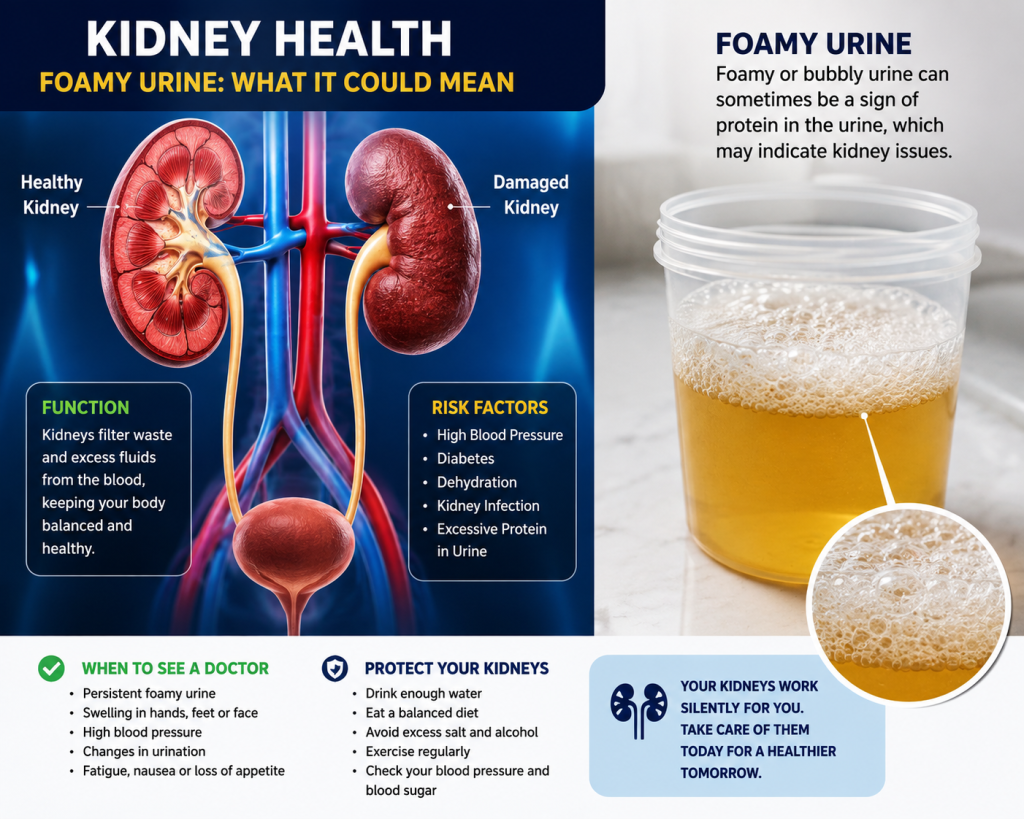
The good news is that foamy urine does not always mean you have a kidney problem. Sometimes it can happen for simple reasons. However, persistent or unusually foamy urine can sometimes be a sign that deserves medical attention.
What causes foamy urine?
There are several possible explanations.
1. A strong or fast urine stream
When urine hits the toilet water with considerable force, it can create bubbles or foam. This is usually harmless, particularly when it happens occasionally.
2. Dehydration
When you don’t drink enough fluids, your urine can become more concentrated. Concentrated urine may sometimes appear darker and more bubbly or foamy.
Drinking adequate water throughout the day can help, although individual fluid needs vary.
3. Toilet cleaning products
Cleaning chemicals or detergents left in the toilet can react with urine and create bubbles or foam. In this situation, the foam is not coming from your body.
4. Protein in the urine
One of the more important causes of persistent foamy urine is protein (albumin) leaking into the urine.
Healthy kidneys normally prevent significant amounts of protein from passing into urine. When the kidneys’ filtering system is damaged, protein can leak through.
This condition is called proteinuria.
Proteinuria can occur with kidney disease and can also be associated with conditions such as diabetes or high blood pressure.
When should you take it seriously?
Occasional bubbles are usually not a reason to panic.
However, consider seeing a healthcare professional if the urine is consistently very foamy, especially if you notice other symptoms such as:
- Swelling around the eyes, face, feet or ankles
- Blood in the urine
- Significant changes in how often you urinate
- Unusual tiredness
- Shortness of breath
- Persistent nausea or loss of appetite
- High blood pressure
These symptoms do not automatically mean you have kidney disease, but they are worth discussing with a healthcare professional.
How can you know if protein is present?
You cannot reliably determine proteinuria just by looking at your urine.
A healthcare professional can check for protein using a urine test, such as a urine dipstick or urine albumin-to-creatinine ratio (ACR). Depending on the findings, additional blood or kidney-function tests may be recommended.
Don’t diagnose kidney disease based on foamy urine alone.
If it happens occasionally, it may simply be related to the force of urination, concentration of the urine or other harmless factors.
But if the foam is persistent or repeatedly occurring, especially together with swelling or other unusual symptoms, getting checked is the safest approach.
Remember:
Foamy urine is a symptom, not a diagnosis.
Pay attention to persistent changes in your body, stay properly hydrated, and seek professional medical advice when something unusual continues.
Your kidneys work silently every day. Don’t ignore persistent changes in your urine.
ATMBLOGGER
Health Education | Awareness | Better Living
Rich Ghana Online
Kindly subscribe for more
LATEST STORIES
- DENKYIRA TRADITIONAL COUNCIL HOLDS PRESS CONFERENCE

- Hon. Emelia Ankomah Inspects Ongoing Major projects in the Municipality

- Dunkwahene Is On The Run As Odeefuo Boa-Amposem IV Storms Dunkwa For Akwasidae.

- Africa Business Investment Summit 2026: A Powerful Celebration of Africa’s Investment Potential in Washington, D.C.

- BREAKING: Immigration Officers Flood Accra Streets, Arrest Foreign Nationals Over Alleged Begging







Leave a Reply